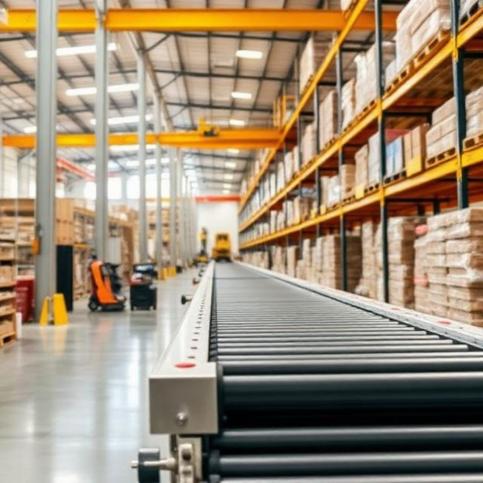
To optimize conveyor systems for peak seasons, focus on identifying the peak season, evaluating the existing conveyor system, enhancing the system, creating a maintenance strategy, and preparing for future peak situations. Norpak Handling, a reputed distributor of conveyors such as roller conveyors, belt conveyors, chain conveyors, and more in Port Hope, Ontario, explores this 5-step process in detail in this blog.
How To Optimize Conveyors For Peak Seasons?
Identify The Peak Season
The first step to optimizing for peak season involves identifying it. When do you experience high demand in your warehouse or distribution center? Is it in the form of increased volume, more diversity of material being transported, or perhaps an increased demand for service requests? Answer these questions to better understand your peak seasons.
For instance, for warehouses, the peak seasons can be right before or after promotional events. Or in the case of food production, it can be synchronized with harvest cycles. Another good way of identifying peak season is noticing performance discrepancies that do not occur normally. It could take the form of minor congestions during transfer or merging, an increase in error rates, or trouble with order visibility.
Evaluate Your Current Conveyor System
After noticing peak seasons and the problems associated with them during those periods, thoroughly evaluate your current conveyor system. An example includes how products move to distribution and packaging. Key areas to watch out for in this case include transfer points, accumulation zones, and decision nodes.
Now, find out your baseline carton processing or item processing speed per hour during normal operations. Also, add any unexpected downtime that might occur during the non-peak period. Next, evaluate any potential bottlenecks in your operation, such as accumulation lanes that may inadvertently slow down automation and processing speed.
It is also key to watch out for areas where a change in dimensions of the product can cause unexpected blockage or issues, such as sorters and diverters, induction spacing, and gaps on curves, or changes in gradients.
By identifying these metrics and problem areas during normal operation, it becomes easier to optimize them to prepare for peak seasons.
Enhance The Conveyor System Strategy
Enhancing the conveyor system for peak conditions involves a combination of mechanical upgrades, operational tweaks, and control optimization. Here are 6 key strategies that can make a major difference in preparing your conveyors for peak seasons:
- Adjusting the speed of the conveyors in such a way that it meets peak demands while simultaneously ensuring safe and effective product handling.
- Focus on special areas such as mergers, curves, or sortation lines, as improving them can significantly improve throughput even with increased demand.
- Balance changes in speed for adjacent zones in the conveyor system.
- Consider modifications in conveyor layout to create more flexibility during peak seasons. Some classic examples are fast lanes, bypass routes, and accumulation lines that reduce stress on the primary conveyor lines.
- Monitor and use real-time data to fine-tune the flow of products.
- Monitor queue lengths, occupancy in each zone, and performance of diverters.
Create A Maintenance Strategy
Maintenance is a key aspect of preparing the conveyor system for peak situations. Some great ways to optimize maintenance include:
- Ensuring proper belt tracking and tensioning
- Confirming proper sensor alignment and accumulation release when required
- Conducting stress tests at peak loads and volume to check for vulnerable spots in advance
When issues do arise, troubleshooting them swiftly is also a key part of proactive maintenance. For this, go through past data of peak seasons to see possible problem areas and prepare solutions in advance.
Moreover, make sure that all the vital spare parts are available so they can be promptly replaced when required. You can stock them right before the peak season, so that there is no disruption in troubleshooting due to supply chain issues.
Prepare For Future Peaks
While all the steps stated above do keep future peaks in mind, one also has to consider expanding operations to keep up with increasing demand. This can take the form of adding modular conveyor platforms and versatile sortation solutions. Or it can include having more space for adding induction, accumulation, or packing stations in the future if required.
Furthermore, integrating new technology can also go a long way to prepare for future contingencies. This, combined with preparing the team for adaption ensures maximum preparedness for upcoming peaks as well as peaks in the future.
Conclusion
In closing, preparing conveyors for peak operations is a comprehensive task that involves various steps ranging from identifying the time, evaluating the existing system, and creating a maintenance strategy to enhancing the current system to handle more volume and diversity.
To learn more about conveyor optimization and how it can benefit your business, reach out to us at Norpak Handling today. As a major conveyor system distributor in Port Hope, Ontario, our collection of conveyors includes rollers, chain conveyors, belt conveyors, and more. For more details, contact us at 905-885-7674.
FAQs:
Can conveyor systems also be descaled to suit reduced demand?
Yes, conveyor systems can be expanded or reduced according to demand, and are a viable material handling strategy.
How can modern technology help conveyor performance during peak seasons?
By combining machine learning, Internet of Things (IoT), smart conveyor upgrades, and advanced automation, modern technology can significantly improve conveyor performance for peak seasons.