



Exploring The Features And Utility Of Modular Conveyor Systems
Introduction
Conveyor systems come in different sizes and configurations. However, in terms of flexibility, few can challenge the utility of modular conveyor systems. What exactly defines a modular conveyor, and what are its characteristics and applications? In this blog, Norpak Handling, a leading distributor of conveyor systems such as roller conveyors, chain conveyors, belt conveyors, and more in Port Hope, Ontario, answers these questions in detail.
What Are Modular Conveyor Systems?
Definition And Basic Working Principle
Modular conveyor systems are material handling systems that are removable and interchangeable with other components. Therefore, as needs arise or demand decreases, the parts of this conveyor can be assembled or disassembled. This is a very different form of conveyor from the conventional variety, which has welded steel components that are a permanent fixture.
Key Components Of A Modular Conveyor System
The most important component of a modular conveyor system is the foundation, which comprises standardized structural frames and mounting points. This type of setup allows for rapid mounting or dismounting of various conveyor system components such as side guards, sensors, robotics attachments, and so on. Similarly, drive units and transport media are also key considerations.
How Modular Systems Differ From Traditional Conveyors?
The biggest difference between modular systems and conventional conveyor systems is adaptability. Once a traditional conveyor is set in place, any changes or modifications are expensive and time-consuming. On the other hand, it is relatively simple to add new technology and accessories to a modular conveyor system.
What Are The Key Features Of Modular Conveyor Systems?
Standardized And Interchangeable Components
One of the biggest features of modular conveyor systems is their standardized design. Be it the base frame or mounting components, this level of standardization makes it easy to interchange components when required. For instance, one type of drive unit can be replaced by another with minimal downtime.
Flexible Configurations And Layouts
The overall configuration and layout are also highly flexible with a modular conveyor. For instance, it can be used as a temporary system for loading goods onto transportation trucks, or it can be a part of a more permanent setup within the facility.
Easy Expansion And Reconfiguration
As the parts can be easily installed and removed, it is easy to expand using modular conveyor components. So, when demand is high, you can use more units, and when demand returns to normal levels, you can easily dismantle the extra setups.
Integration With Automation Technologies
Integrating modular conveyors with different automation technologies, such as sensors, is relatively simple. This makes the operation more accurate and precise.
Simplified Maintenance And Component Replacement
Maintenance of these conveyors is also relatively simple, and replacement is even simpler. Instead of a major repair or overhaul, the component can be replaced in no time.
What Types of Modular Conveyor Systems Are Available?
Modular Belt Conveyors
Modular belt conveyors mainly comprise small plastic components that are joined together to create a belt loop. This offers a highly customizable surface for material handling in factory settings.
Modular Roller Conveyors
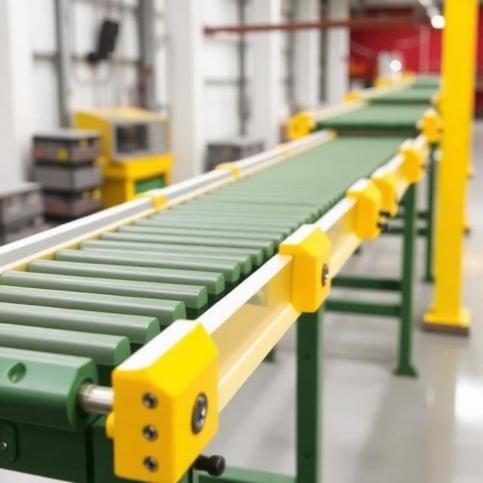
Modular roller conveyors are similar to a typical roller conveyor, with one major difference. Instead of being welded to the frame, the conveyor rollers are identical and easily replaceable.
Modular Chain Conveyors
Modular chain conveyors also feature plastic or metal links that are joined together by pins to create a strong chain. This creates a flexible moving surface that is perfect for handling heavy goods. Moreover, the chain can also be lengthened or shortened as required.
Spiral And Vertical Modular Conveyors
This is a specialized form of conveyor system where the components are designed to move products vertically in a spiral motion. The individual components of the conveyor, such as slats, platforms, or belts, can be modular in nature.
Specialized Modular Conveyor Modules
These comprise conveyor modules for specialized tasks such as sortation. Examples include diverters, pushers, multi-angle ball sorters, and more.
How Do Modular Conveyor Systems Improve Industrial Operations?
Improving Material Flow
Modular conveyor systems help industrial operations by improving the flow of materials. This is done by the characteristic features of the conveyor, which make it easier to transport goods with minimal changes, remove bottlenecks, as well as ensuring rapid maintenance when required.
Reducing Downtime
Since each setup can be changed very quickly and with minimal effort, it is a major boon for industrial operations where downtime is not an option. Malfunctioning sections can be removed quickly and effortlessly, ensuring efficient operations and lower downtime.
Supporting Production Scalability
Modular conveyors are the best choice when it comes to production scalability. Since the components can be installed rapidly and ensure proper functioning, it is the ideal choice for industrial operations that are required to scale up.
Optimizing Space Utilization
If space constraints are a major factor in a facility, modular conveyors can be used to address this. For instance, drive units can be made with internal drum motors to ensure more space if required.
Improving Operational Flexibility
The operational flexibility of modular conveyors is unmatched. The layouts can be reconfigured, extended, or rerouted with curves and inclines as production lines change, without replacing the entire setup.
What Industries Use Modular Conveyor Systems?
Manufacturing
Manufacturing can benefit from modular conveyor systems to handle specialized setups without investing in permanent fixtures. For instance, modular conveyors can handle both assembly and sortation without a major change in layout.
Warehousing And Distribution
Warehousing and distribution, in particular, benefit from modular conveyor systems, as they can handle more or less throughput when required. It can also be changed to fit different applications, such as loading goods in trucks or taking them for storage. The same benefits hold true for the packaging and e-commerce sectors as well.
Food And Beverage
The flexibility features aside, modular conveyor components are mostly plastic by design, making them an integral part of the food and beverage industry. This is because they can be washed thoroughly with pressurized water without worrying about corrosion in the long run.
How To Choose The Right Modular Conveyor System?
Identify Material And Product Characteristics
The first step is identifying the type or types of materials being transported. Do they have a flat bottom or something more irregular? Are they heavy or are they light? Are they fragile, or can they handle rough handling? All these factors will determine the selection of the modular conveyor.
Determine Required Throughput
What is the required throughput that the conveyor is expected to handle? This will help determine the size and length of the modular conveyor. While more can be added in the future if needed, facilities still have to take this into consideration for the initial setup.
Evaluate Load And Conveyor Capacity
This is extremely vital. The load acting on the conveyor should be within the conveyor capacity. Failing to take this into account can lead to product damage, conveyor damage, bottlenecks, and total system failure.
Consider Available Floor Space
Floor space also requires consideration. For more compact spaces, a more vertical modular design might be suitable. If not, more conventional layouts can be considered.
Plan For Future Expansion
Is there a chance of rapid expansion in the future? This will require more space to lay out modular conveyor systems, whether as the main material handling system or as an accessory.
Assess Automation And Integration Requirements
Do you need to add robotic arms, sensors, scanners, or other forms of automation to the conveyor? If so, it also has to be taken into account when laying the foundation for the modular conveyor.
What Role Does Modularity Play In Conveyor Maintenance?
Faster Component Replacement
When one part of a modular conveyor is damaged, it can be quickly replaced with a newer part. This makes maintenance faster and more effective.
Spare Parts Standardization
Due to the nature of replacement, the spare parts of a modular conveyor are standardized. This makes procurement and storage easier, helping maintenance in the long run.
Easier Troubleshooting
Due to standardization, any problems in the conveyor are also easier to troubleshoot. This adds another dimension of ease to the maintenance protocol.
Preventive And Predictive Maintenance
With the integration of sensors and AI software, maintenance becomes highly optimized through preventive and predictive maintenance. Now, parts can be repaired or replaced well before they fail, eliminating downtime in some cases.
Frequently Asked Questions
What is a modular conveyor system?
A modular conveyor system is a material handling system wherein components can be assembled or disassembled separately to create a functioning whole.
What are the advantages of modular conveyors?
The main advantages of modular conveyors include flexibility, easy maintenance, scalability, and effective space management.
Can modular conveyors be expanded or reconfigured?
Yes, due to their inherent design, modular conveyors are perfect for expansion or reconfiguration.
Are modular conveyors suitable for heavy loads?
Modular conveyors can be suitable for heavy loads, but it depends entirely on the conveyor’s capacity.
How do modular conveyors simplify maintenance?
Modular conveyors simplify maintenance by enabling easy component replacement, reducing downtime, enabling predictive maintenance, and ensuring part standardization.
Conclusion
To summarize, modular conveyors are the future of material handling as it showcases a wide range of benefits, ranging from easy scalability to layout flexibility and more.
For more details on modular conveyors and whether they are right for you, reach out to us at Norpak Handling today. As a major distributor of conveyor systems in Port Hope, Ontario, our massive inventory of general conveyors includes roller conveyors, belt conveyors, chain conveyors, and more. Contact us today to learn more about how we can boost your business operations with our innovative equipment and skills.