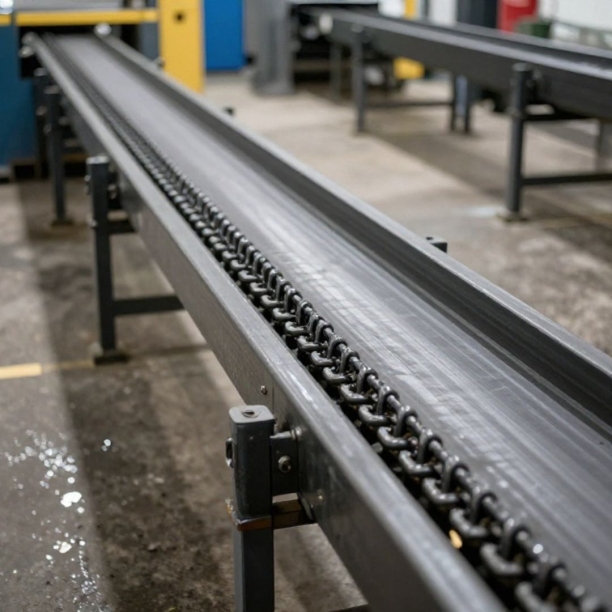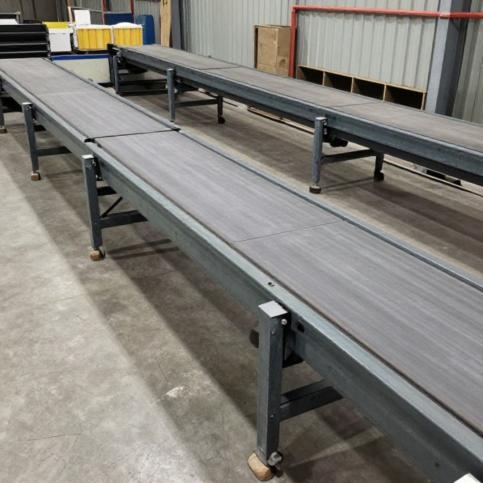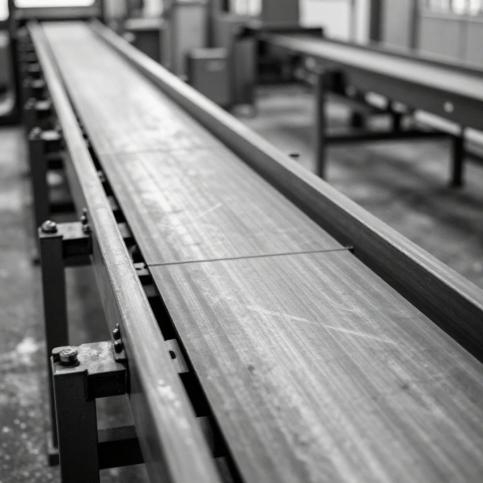
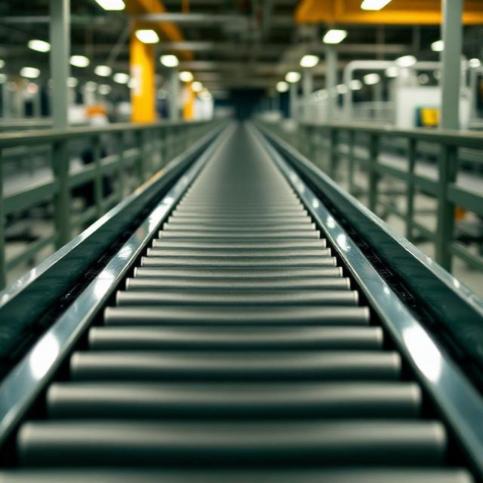
3 applications of belt conveyors in industrial settings include manufacturing and assembly, mining and quarrying, and recycling facilities. Norpak Handling, a major distributor of conveyor systems such as belt conveyors, chain conveyors, roller conveyors, and more in Port Hope, Ontario, explores these applications in detail in this blog.
What Are The Industrial Applications Of Belt Conveyors?
Manufacturing And Assembly
Manufacturing and assembly unanimously use belt conveyors for major material handling operations. The conveyor belts facilitate easy movement of equipment from one robot station to the next without any damage. This makes them invaluable for moving products in different stages of manufacturing or for final assembly.
Mining And Quarrying
Mining and quarrying, as an industry, suffers from harsh environmental conditions and remote locations. For the transportation of material in this sector, many rely on trucks, but it can be an inefficient process. Alternatively, belt conveyors are used to transport materials such as aggregate, coal, and ores over large distances instead of trucks.
Recycling Facilities
Recycling facilities are fully functioning industrial operations that require a lot of material handling for segregation and sorting. The conveyor belts used in these types of conveyors allow for easy movement and sortation of mixed waste, plastics, glass, paper, and more. Hence, they are indispensable for recycling facilities.
Conclusion
In closing, belt conveyors are used for material handling, long-distance transportation, and sortation across manufacturing facilities, mining and quarrying operations, and recycling facilities.
Norpak Handling is a leading system integrator and distributor of conveyor machines in Port Hope, Ontario. Our conveyor system range includes gravity conveyors, roller conveyors, incline conveyors, chain conveyors, belt conveyors, plastic conveyors, accumulation conveyors, and much more. Our experts are also adept at designing custom solutions that match unique design and engineering specifications. Contact us today to learn more.
FAQs:
What are the most common types of conveyor belts?
Common types of conveyor belts include flat belts, modular belts, cleated belts, and troughed belts.
What are the features of polyurethane conveyor belts?
The features of polyurethane conveyor belts include smoothness, flexibility, and resistance to oils and chemicals.