
Key Takeaways
- Gravity roller conveyors transport goods without power
- Varieties include heavy-duty and standard gravity roller conveyors
- Applications include warehousing, manufacturing, and industrial material handling
- To select the right gravity roller conveyor, focus on load capacity, roller diameter, wall thickness, roller spacing, framing, length, and more
- Avoid underestimating load, roller spacing, environmental conditions, and future expansion
What Is A Heavy-Duty Gravity Roller Conveyor
How Heavy Duty Gravity Roller Conveyors Work
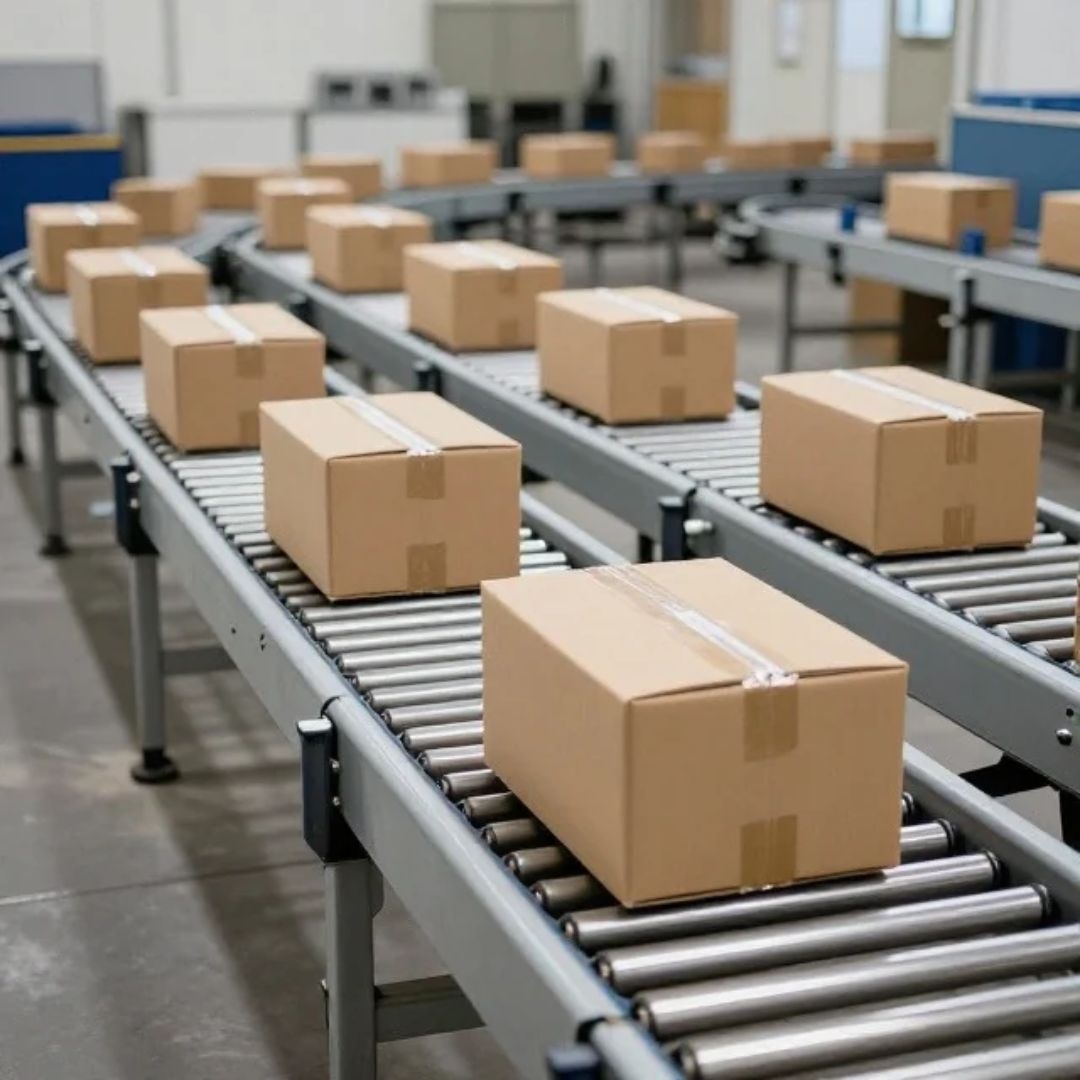
As the name suggests, gravity roller conveyors work by using gravity to transport heavy goods from one point to another. The product to be transported is placed on the roller conveyor, and the conveyor is set at an angle. This allows gravity to move the products on a decline without any need for an external power source.
Heavy Duty Vs. Standard Gravity Roller Conveyors
Heavy-duty and standard gravity roller conveyors differ in terms of load limits. The former can handle heavy-duty loads with ease, whereas the latter is suited for light to medium loads. Of course, the load-bearing ability will vary with other variables such as roller thickness, frame width, roller spacing, and more. However, the gravity roller conveyor benefits remain the same, irrespective of the type of conveyor.
When Should You Choose A Heavy-Duty Gravity Roller Conveyor?
Heavy Loads In Manufacturing And Warehousing
- In manufacturing and warehousing, gravity roller conveyors are a staple
- Picking and packing processes most commonly benefit from heavy-duty gravity conveyors
Pallet, Container, And Industrial Material Handling
- For palletization, container and industrial material handling, heavy-duty gravity conveyors are essential
- The thicker rollers are suitable for heavy pallets
- They can also be combined with stops, diverts, and other accessories for specialized industrial material handling
When Powered Conveyors Are A Better Choice
- Powered conveyors are preferred over gravity roller conveyors when products have to be moved horizontally or up an incline
- They are also necessary in specialized material handling operations, such as sorting and merging lines
- However, most facilities combine both depending on applications. Gravity roller conveyors provide energy efficiency, and powered conveyors handle the complicated parts of transportation.
Key Specifications To Evaluate Before Buying
| Key Specifications | Operational Significance | Verification |
| Load capacity and weight distribution | Determines the load capacity of the conveyor | Check if the conveyor can handle the maximum product load |
| Roller diameter, wall thickness, and construction | Decides how effectively it can transport heavy loads | Check physical dimensions and compare with load and frame standards |
| Roller spacing | Determines the product size | Use the smallest package to check if it is transported without sagging or tipping |
| Conveyor width, length, and frame strength | Also determines the product size (largest) | Evaluate the system dimensions and load paths. Compare them against physical measurements and engineering criteria |
| Roller bearings, axles, and mounting configurations | Dictates movement efficiency, durability and incline | Inspect each bearing, axle and mounting component for physical fit, rotation, and structural alignment |
Load Capacity And Weight Distribution
Heavy-duty gravity roller conveyors also have weight limits. This is a key specification to consider before investing in one, as conveyor load capacity determines other aspects of the conveyor.
Roller Diameter, Wall Thickness, And Steel Construction
Roller diameter and wall thickness are also directly correlated to the conveyor’s load capacity. The greater the load-bearing requirement, the thicker the roller diameter and wall need to be. For heavy-duty conveyor roller applications, steel is always a better choice than plastic or composite materials.
Gravity Conveyor Roller Spacing And Product Support
Gravity conveyor roller spacing will determine the smallest product that it can transport smoothly without any snags. It will also determine the shape of the product, as certain irregularly shaped products might not be a good fit for gravity conveyors.
Conveyor Width, Length, And Frame Strength
While frame strength is also an extension of the total load, including the conveyor rollers, the width and length of a heavy-duty gravity roller conveyor will determine the largest size of the product that can be transported safely.
Roller Bearings, Axles, And Mounting Configurations
Roller bearings, axles, and gravity conveyor roller mounting configurations are key to deciding the smoothness of movement of the gravity conveyor, as well as its long-term durability and the incline on which it will operate.
How To Select The Right Heavy-Duty Gravity Roller Conveyor
Step 1 — Determine Maximum Load Weight And Dimensions
Determine the maximum load weight and dimensions, as they will impact all other major factors regarding the selection of the right heavy-duty gravity roller conveyor.
Step 2 — Calculate Required Roller Spacing And Load Support
Roller spacing and load support are key factors to consider apart from the maximum load. Choose them properly, as this will further determine the size of the product being conveyed and how effectively consecutive rollers can support the maximum load.
Step 3 — Select Roller Materials And Frame Construction
Select the right roller materials, as they will also determine the sturdiness of the conveyor. Durable materials, such as steel, will help provide better support and stability. The frame construction is even more paramount, as it handles the weight of the product as well as conveyor components.
Step 4 — Evaluate Conveyor Layout, Incline, And Operating Conditions
The conveyor layout is of maximal importance, and this, in turn, will be determined by the layout of the facility. Another key consideration is the incline. Depending on the fragility of the materials being transported, it can be a gentler or steeper incline. Lastly, operating conditions such as temperature, pressure, humidity, and other factors all impact gravity roller conveyor selection.
Step 5 — Compare Conveyor Models And Confirm Specifications
For the best results, compare the different types of conveyor models and confirm specs to see which is right for your specific application.
Heavy Duty Gravity Roller Conveyor Options For Industrial Facilities
Straight Heavy Duty Gravity Roller Conveyors
The straight heavy-duty gravity conveyor is the simplest iteration of this type of conveyor system. It is ideal for most standard operations and helps move heavy products along a straight line.
Curved And Customized Conveyor Configurations
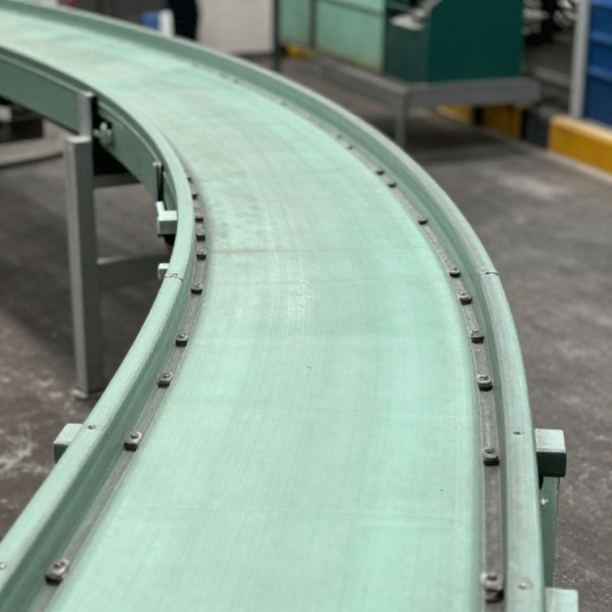
A curved gravity conveyor is a more specialized type of conveyor system that helps move products along a curved path. However, since it is only powered by gravity on an incline, the curved conveyors require accessories in place that will prevent products from toppling over, such as guard rails.
Evaluating Norpak's 36SR Heavy Duty Gravity Roller Conveyor
As a distributor of conveyor systems, Norpak Handling also offers specialized gravity roller conveyors in the form of Hytrol’s 36SR Straight Heavy Duty Gravity Roller Conveyor. This heavy-duty gravity conveyor is ideal for transporting pallets, castings, and other heavy goods. The rollers can be set high or low depending on operational requirements, and the bearings have steel inner shields and grease lubrication for maximum durability.
Heavy Duty Gravity Roller Conveyor Buying Checklist
Here is a brief checklist defining the major gravity conveyor product considerations:
- Maximum load ratings and dimensions
- Conveyor and roller dimensions
- Frame capacity
- Roller spacing and product base compatibility
- Roller materials and overall frame construction
- Conveyor layout, safety, and maintenance access
- Installation and mounting requirements
- Incline and environmental operating conditions
- Comparison with other conveyor types
- Supplier confirmation and warranty
What Affects The Cost Of A Heavy-Duty Gravity Roller Conveyor?
Roller Specifications, Frame Materials, And Conveyor Dimensions
While gravity conveyors are already more cost-effective than their powered counterparts, the cost of this conveyor can be further determined by roller specifications, frame materials, and conveyor dimensions. As a result, thicker conveyor rollers, bigger frames, and dimensions will cost more than their more compact variations.
Customization, Accessories, And Installation Costs
Additional customization, in the form of sortation, accumulation, or something else, will also drive up the cost of gravity roller conveyors. The presence of accessories such as guard rails will drive it up even further. Moreover, the presence of additional features and customizations will also increase the overall installation costs of the gravity roller conveyor, as the setup becomes much more complicated.
Maintenance Requirements And Total Cost Of Ownership
Lastly, maintenance requirements and replacing parts after excessive wear also come into the total cost of ownership. Hence, it also impacts the cost of a heavy-duty roller conveyor significantly.
Common Mistakes To Avoid When Buying Heavy-Duty Roller Conveyors
Underestimating Load Capacity And Weight Distribution
- Not considering load capacity and weight distribution can damage conveyors under heavy loads.
- Always take this into consideration to ensure a smooth and even flow of products.
Choosing Incorrect Roller Spacing Or Conveyor Width
- Incorrect roller spacing or conveyor width can cause the product to snag or fall off the conveyor entirely.
- Calculate appropriate roller spacing and conveyor width according to applications.
Overlooking Operating Conditions And Future Requirements
- Not considering scalability or challenging operating conditions, leading to accelerated conveyor wear.
- Always choose materials and features based on operating conditions
- Leave room for extending the gravity roller conveyor on the basis of peak demand and scalability
- Modular additions are a great choice for variable requirements
Conclusion
To conclude, gravity conveyors are an indispensable part of transporting heavy-duty products across a multitude of facilities such as warehouses, manufacturing facilities, and packaging facilities.
For more information on conveyor systems and their utility, contact us at Norpak Handling today. As a major distributor and system integrator of conveyors in Port Hope, Ontario, we offer a wide variety of products such as belt conveyors, roller conveyors, chain conveyors, and more. Click here to get in touch with our experts.
Frequently Asked Questions
How Much Weight Can a Heavy-Duty Gravity Roller Conveyor Hold?
The maximum weight of a heavy-duty gravity roller conveyor depends on roller diameter, spacing, and frame construction. So it depends on a case-by-case basis.
How Many Rollers Should Support a Load on a Gravity Conveyor?
At least 3 rollers should always be in contact with the load for optimal support.
What Roller Diameter Is Best for Heavy-Duty Applications?
For heavy-duty applications, the roller diameter should be at least 2.5 inches or above.
How Much Slope Does a Heavy-Duty Gravity Conveyor Need?
The right slope for a heavy-duty gravity conveyor will depend on the weight of the load, the base material, and the size of the product.
Can Heavy-Duty Gravity Roller Conveyors Handle Pallets?
Yes, heavy-duty gravity roller conveyors are ideal for handling pallets because of the flat bottom.