



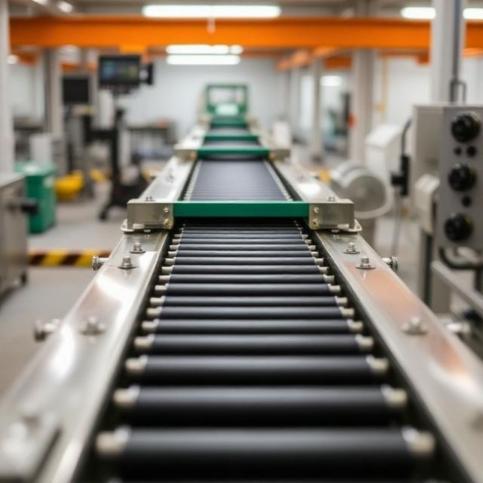
How Do Sortation Conveyors Aid In Streamlining Operations?
Introduction
Sortation conveyors are a major part of material handling operations. Responsible for sorting products in a busy conveyor line, they have numerous applications. But how do they work, what are the main types of sortation conveyors, and how do they streamline operations? Norpak Handling, a leading distributor of conveyors such as roller conveyors, chain conveyors, belt conveyors, and more in Port Hope, Ontario, explores all these questions and more in this blog.
What Are Sortation Conveyors And How Do They Work?
Definition Of A Sortation Conveyor
A sortation conveyor is a specialized type of material handling system where items are identified on the conveyor line and sent to their respective destination based on their designation.
How Products Are Identified And Routed
Sortation conveyors identify and route products by the use of components such as sensors, barcodes, and photo eyes. The physical aspects of the conveyor include shoes, belts, and trays to carry out the sortation.
Role Of Sensors, Scanners, and Controls
Sensors, scanners, and controls are critical for sortation conveyors, as they are responsible for the sortation process.
What Are the Main Types Of Sortation Conveyors?
Sliding Shoe Sorters
Sliding shoe sorters comprise aluminum slats with sliding shoes that gently guide products to the required lines.
Crossbelt Sorters
Crossbelt sorters have an ongoing loop of carriers that carry a small conveyor belt in each loop. The belt is mounted perpendicular to the main track, and the belt discharges the products when they reach their destination.
Split-Tray Sorters
These sorters carry products on a tray that tilts to remove the products from the conveyor line when they reach their desired destination.
Activated Roller Belt Sorters
These sorters comprise activated rollers in the belt line, which are used to divert and sort products when required.
Narrow Belt Sorters
These are a series of narrow conveyor belts with a pivot wheel between them and divert products at an angle.
Pivot Wheel Sorters
The wheels are attached at an angle to the main conveyor and can divert products at different angles as required.
How Do Sortation Conveyors Streamline Material Handling?
Increasing Throughput
Automating sortation with these conveyors leads to consistent, predictable output. Therefore, it guarantees increased throughput in the long run.
Reducing Manual Sorting
Sorting products manually can be a tiresome and time-consuming process. Additionally, it can lead to accuracy issues and it can pose safety risks for the workers. Sortation conveyors make the process automatic and reduce instances of manual sorting.
Improving Sorting Accuracy
To expand on the point above, by reducing the instances of manual sorting, it is also possible to increase the accuracy of sorting with these specialized conveyors. This leads to better sortation results and speed in the long term.
Reducing Product Handling
Aside from manual sortation, product handling in a conveyor line makes the entire process more complicated. Even in the case of automated conveyors, handling fragile goods can still be an issue. However, with the use of automated sortation conveyor systems, the specialized tools can be calibrated to handle fragile goods and reduce product handling.
Maintaining Consistent Material Flow
When it comes to maintaining consistent material flow, sortation conveyors are one of the best solutions. They do this by combining real–time tracking software, precise item gapping, and automated methods of diversion mechanisms.
What Operational Benefits Do Sortation Conveyors Provide?
Faster Order Fulfillment
Due to the ability to sort quickly and accurately, sortation conveyors are highly beneficial for faster order fulfillment operations. This is invaluable for busy warehouses.
Better Use Of Labour
Due to the automation of sorter conveyor systems, the labour in these facilities can be diverted to more productive tasks. It also helps prevent instances of safety hazards that may arise due to manual handling.
Reduced Sorting Errors
By integrating sensors, scanners, and other modern equipment, sorting conveyors are excellent for reducing errors during handling. This reduction in sorting errors is a major boost to productivity and efficiency in the long term.
Improved Space Utilization
Instead of sprawling areas for manual sortation or wide staging zones, sortation conveyors can ensure improved space utilization through compact and automated paths.
Greater Operational Scalability
The best part about sortation conveyors is that they can be easily scaled up or down. During times of high demand, their use can be ramped up, and during normal throughput times, their use can be reduced. This helps boost short-term results and long-term scalability.
Where Are Sortation Conveyors Commonly Used?
Warehouses And Distribution Centers
Warehouses and distribution centers deal with multiple third parties and, as such, require adaptable sortation zones to carry out various tasks with ease.
E-Commerce Fulfillment
In the world of e-commerce fulfillment, sortation conveyors are a key part of material handling operations in the form of high-speed routing and managing returns.
Retail Distribution
The application of sortation conveyors is similar for retail distribution, contributing in a major way to dynamic packaging and distribution operations.
Parcel And Postal Operations
In order to sort packages of different varieties and sizes based on delivery route or region, these conveyors are also used in major capacity in parcel and postal operations.
Manufacturing And Packaging
Similarly, in the case of manufacturing, sortation conveyors play multiple key roles, ranging from component routing to sending the right products towards packaging and much more.
How To Choose The Right Sortation Conveyor?
Product Size, Weight, And Shape
The characteristics of a product are a major consideration when selecting a sortation conveyor. The main parameters to look out for include size, weight, and shape. For instance, rigid cartons are best paired with shoe sorters or pivot wheel systems.
Required Throughput
What will the required throughput be for a particular operation? This will determine the type of sortation conveyor. The requirements for high-speed facilities will be quite different from low-volume operations.
Sorting Destinations
Where the product is meant to be sorted is also a major way to determine the selection of sortation conveyors.
Available Floor Space
A major non-negotiable while choosing sortation conveyors is floor space. Some types of conveyors are better suited to spatial constraints than others.
Product Handling Requirements
Is the product being handled fragile in nature or requiring special handling protocols? For instance, for soft or irregular products, split-tray sorters are the best choice.
Integration With Existing Conveyor Systems
Is there enough room and infrastructure to integrate easily with existing conveyor systems? This also determines the selection of appropriate sortation conveyors.
Automation And Control Requirements
What level of automation and control is required for a particular application? Sortation conveyor selection also requires this factor to be considered.
How Do Sortation Conveyors Integrate With Warehouse Automation?
Warehouse Management Systems
In warehouse management systems, sortation conveyors are integrated with the help of a control and execution layer that translates high-level data to mechanical sorting commands in real-time.
Warehouse Control Systems
Warehouse control systems process the scan data from sortation conveyors and use it to match data.
Barcode And Vision Systems
Barcode and vision systems on a sortation conveyor are responsible for capturing key data as it passes through, such as product ID, weight, and dimensions.
Sensors And Real-Time Tracking
Sensors enable real-time tracking of products as it passes through the system.
Automated Routing And Decision-Making
Based on all these parameters, the system allows for automated routing and decision-making, contributing towards warehouse automation.
Frequently Asked Questions
What is the main purpose of a sortation conveyor?
The main purpose of a sortation conveyor is to identify, track, and route products or packages to specified destinations automatically along a production or distribution line.
How do sortation conveyors improve warehouse efficiency?
Sortation conveyors improve warehouse efficiency by automatically identifying items with the help of scanners and routing them to the correct destinations.
What are the different types of sortation conveyors?
Different types of sortation conveyors include sliding shoe sorters, crossbelt sorters, split-tray sorters, activated roller belt sorters, narrow belt sorters, and pivot wheel sorters.
How do you choose the right sortation conveyor?
To choose the right sortation conveyor, consider product characteristics, required throughput, sorting destinations, available floor space, handling requirements, and integration and automation requirements.
Can sortation conveyors integrate with warehouse automation systems?
Yes, sortation conveyors are ideally suited for integration with warehouse automation systems.
Conclusion
In closing, sortation conveyors are a major part of streamlining operations across different facilities.
For more details on sortation conveyors and whether they are right for you, reach out to us at Norpak Handling today. As a major distributor of conveyor systems in Port Hope, Ontario, our massive inventory of general conveyors includes roller conveyors, belt conveyors, chain conveyors, and more. Contact us today to learn more about how we can boost your business operations with our innovative equipment and skills.